What is ASEPTIZER ?
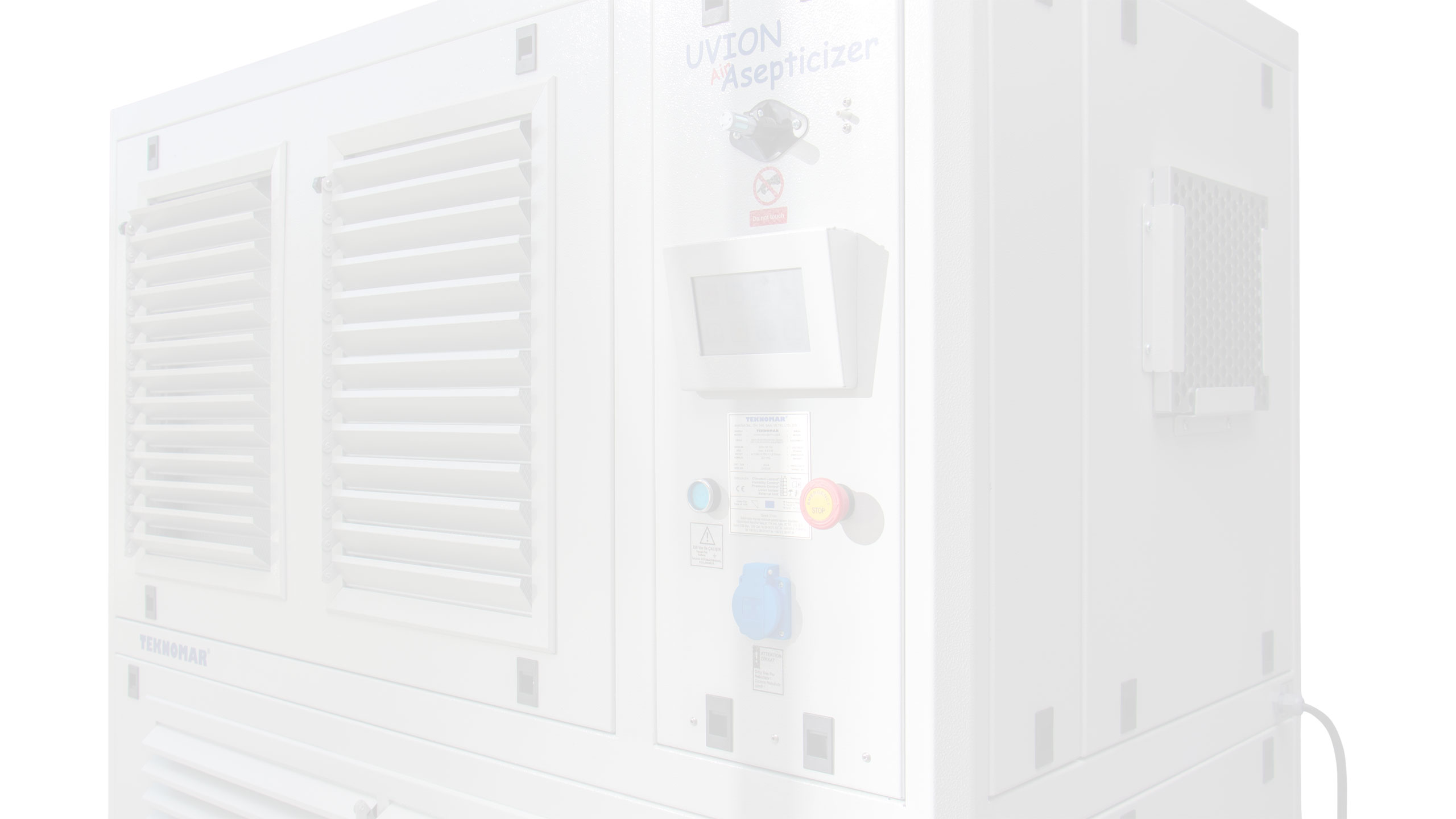
Aseptizer, is a professional air decontamination and air hygiene system developed to reduce airborne particulate and microbial contamination in hospitals, laboratories, clinics, controlled environments, and other critical indoor spaces. The system continuously draws ambient air into the unit, processes it through multiple treatment stages, and returns treated air to the environment. Rather than functioning solely as an air filter, Aseptizer is designed to establish a continuous and controlled air hygiene cycle within enclosed spaces.
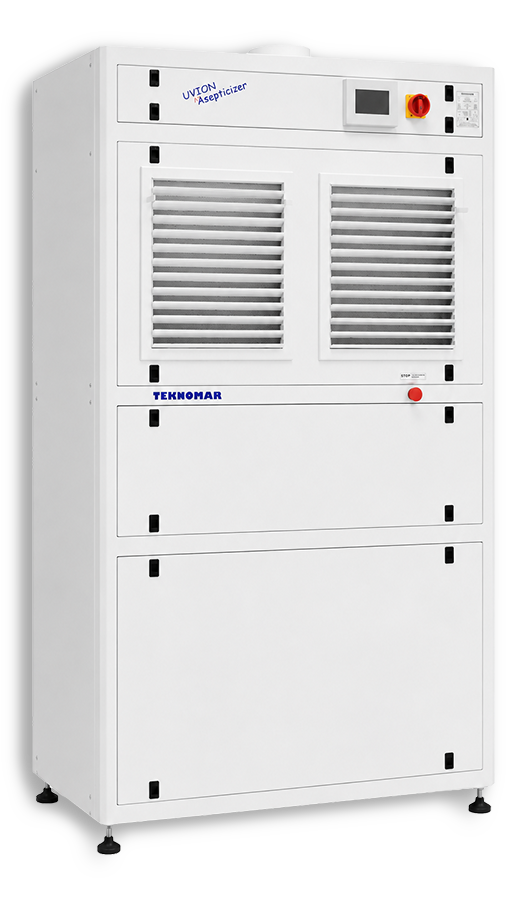
The operating principle of Aseptizer is based on the combined management of air circulation, particulate control, and biological decontamination. Indoor air is drawn into the system at a controlled airflow rate, passed through different treatment stages, and then returned to the room. As this process is continuously repeated, the entire room air volume can be treated multiple times over a defined period. Therefore, Aseptizer performance should be evaluated not only by airflow capacity, but also by room volume, required air changes per hour, and the targeted level of air decontamination.
One of the technologies that differentiates Aseptizer from conventional air purification systems is its UVION atmospheric plasma technology. UVION utilizes an ionized environment and reactive species generated under atmospheric conditions to provide an active treatment stage that contributes to the control of airborne biological contaminants. Instead of relying exclusively on passive particle filtration, Aseptizer combines filtration with active biological decontamination mechanisms within the same airflow pathway, creating a multi-stage and hybrid air treatment approach.
Airborne microorganisms are frequently transported through the environment in association with aerosols, droplet nuclei, and particles of different sizes. Effective air hygiene therefore requires more than targeting microorganisms or particles independently. Aseptizer addresses particulate control and biological decontamination within an integrated system, aiming to reduce both the physical particulate burden and biological contamination present in indoor air. This approach is particularly relevant in healthcare and controlled environments where airborne microbial quality is an important operational parameter.
The UVION atmospheric plasma stage represents an important component of Aseptizer's biological decontamination function. Atmospheric plasma can generate ions, charged particles, and short-lived reactive species capable of producing oxidative interactions with microbial structures such as cell membranes, proteins, and other biological components. Aseptizer combines these physicochemical mechanisms with controlled airflow to provide a multi-mechanism approach for reducing airborne biological contamination.
Aseptizer is designed for applications including operating rooms, intensive care areas, patient rooms, outpatient clinics, laboratories, waiting areas, sterilization departments, and controlled production environments where indoor air quality is critical. It can be used where existing ventilation needs additional support, where continuous recirculation and treatment of indoor air is required, or where localized air hygiene needs to be strengthened. The appropriate configuration and capacity should be determined according to room volume, intended use, occupancy conditions, and environmental risk level.
Correct Aseptizer selection is not based solely on room floor area. A fundamental engineering parameter is the relationship between room volume (m³) and the required Air Changes per Hour (ACH). As a simplified engineering calculation, the required airflow capacity can be expressed as Q = V × ACH, where Q represents the required airflow rate in m³/h, V represents room volume in m³, and ACH represents the targeted number of air changes per hour. This approach allows an Aseptizer selection system to calculate the required air-processing capacity based on room dimensions and application requirements and subsequently identify the appropriate Aseptizer configuration.
An important characteristic of Aseptizer is that it treats air hygiene as a continuous process that can be integrated into the normal operation of occupied indoor environments. Actual performance depends on engineering factors including correct capacity selection, equipment positioning, unrestricted air inlet and outlet paths, maintenance conditions, and proper management of filtration and other system components. Aseptizer should therefore be considered a supporting air decontamination technology integrated with ventilation, environmental hygiene, and infection-control strategies rather than a universal replacement for them.
In summary, Aseptizer is an engineering-based air decontamination platform combining controlled air circulation, particulate management, filtration, and UVION atmospheric plasma-based biological decontamination mechanisms. Its fundamental objective is to continuously process indoor air and reduce airborne particulate and biological contamination through repeated and measurable air-treatment cycles. For this reason, Aseptizer is positioned not simply as an "air purifier," but as a professional air decontamination system designed particularly for healthcare, critical indoor spaces, and controlled environments.